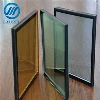

Low-E glass has become an important material in energy-efficient buildings. It helps control heat transfer through windows and curtain walls while maintaining natural daylight. However, when selecting Low-E glass for a project, many architects and contractors face the same question: Should they choose hard coat Low-E glass or soft coat Low-E glass?
Although both products use a low-emissivity coating to improve energy performance, their manufacturing processes, durability, and applications are different. Understanding these differences can help you select the right glass solution for your building project.
What Is Low-E Glass?

Low-E glass, also called low emissivity glass, is manufactured with a special metallic coating on the glass surface. This coating reduces the amount of infrared energy passing through the glass. Compared with standard clear glass, Low-E glass provides better thermal insulation and improves overall building energy efficiency.
Low-E glass is widely used in insulated glass units (IGUs), curtain walls, commercial windows, and modern architectural facades. During winter, it reduces heat loss from the interior. In summer, it helps limit unwanted solar heat entering the building.
What Is Hard Coat Low-E Glass?
Hard coat Low-E glass is produced during the float glass manufacturing process. The coating is applied while the glass is still at a high temperature. During this process, the metallic oxide layer becomes chemically bonded with the glass surface. This creates a durable coating that can withstand handling and further processing.
Because of its strong surface performance, hard coat Low-E glass offers more flexibility during fabrication. It can usually be cut, tempered, and processed according to different project requirements.
Hard coat Low-E glass is commonly used for residential windows, glass doors, skylights, and smaller commercial projects. It provides improved thermal performance while maintaining good durability and cost efficiency.
What Is Soft Coat Low-E Glass?
Soft coat Low-E glass is manufactured using a vacuum sputtering process after the glass production stage. During this process, a very thin metallic coating is added to the glass surface. This coating provides higher energy performance because it has better control over infrared radiation.
However, the coating is more sensitive than hard coat Low-E glass. To protect it from damage, soft coat Low-E glass is normally installed inside an insulated glass unit, with the coated surface facing the air space.
Soft coat Low-E glass is widely selected for commercial buildings, curtain wall systems, office towers, shopping centers, and projects with strict energy requirements.
Hard Coat vs Soft Coat Low-E Glass: What Are the Differences?

The biggest difference between hard coat and soft coat Low-E glass is the coating technology.
| Different | Hard Coat Low-E Glass | Soft Coat Low-E Glass |
| Coating Process | Applied during glass manufacturing | Applied after glass production |
| Coating Durability | Higher durability | Requires IGU protection |
| Processing | Easier fabrication | Requires careful handling |
Explore our Low-E insulated glass solutions
Which Low-E Glass Should You Choose?
The right choice depends on the performance requirements of your project.
For projects that need durable glass with easier fabrication, hard coat Low-E glass can be a practical option. It works well for residential applications, doors, and projects where the glass may need additional processing. For commercial buildings and high-performance facades, soft coat Low-E glass is usually the preferred solution. It provides better insulation performance and stronger solar control, especially when combined with insulated glass units.
Conclusion
Both hard coat and soft coat Low-E glass improve building energy efficiency, but they are designed for different needs. Hard coat Low-E glass focuses on durability and processing flexibility. Soft coat Low-E glass focuses on higher insulation performance and solar control.
For commercial buildings, curtain walls, and energy-efficient architectural projects, selecting the right Low-E glass system can improve indoor comfort, reduce energy costs, and support long-term building performance.
Frequently Asked Questions
Q: Is soft coat Low-E glass better than hard coat Low-E glass?
A: Soft coat Low-E glass generally provides better insulation and solar control performance. Hard coat Low-E glass offers better durability and easier processing. The best choice depends on the application, climate, and project requirements.
Q: Can hard coat Low-E glass be tempered?
A: Yes. Hard coat Low-E glass can usually be tempered and processed after production, making it suitable for customized glass fabrication.
Q: Why does soft coat Low-E glass need to be installed inside an IGU?
A: The coating of soft coat Low-E glass is more sensitive to scratches and environmental exposure. Installing it inside an IGU protects the coating and improves long-term stability.
Q: Which Low-E glass is suitable for curtain walls?
A: Soft coat Low-E glass is commonly used for curtain walls because it provides better energy performance, solar control, and visual appearance.
Q: Does Low-E glass reduce heat?
A: Yes. Low-E glass reduces heat transfer by reflecting infrared energy. It helps keep buildings cooler in summer and warmer in winter.