
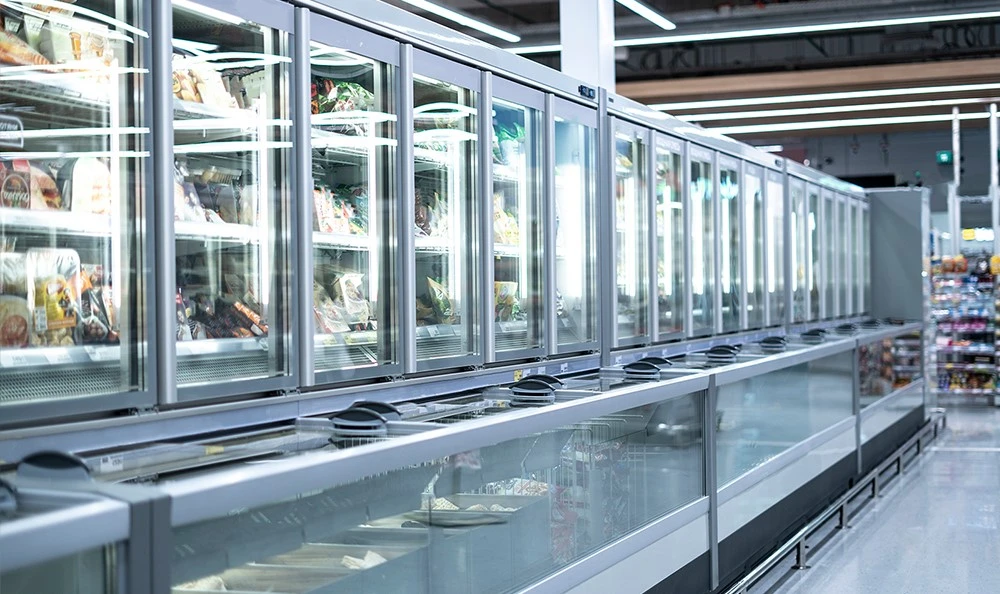
In supermarkets, convenience stores, beverage coolers, and refrigerated display cabinets, the glass needs to provide clear product visibility while meeting safety, thermal insulation, and energy-efficiency requirements.
For refrigeration equipment manufacturers, choosing the right freezer glass or refrigerator glass depends on the operating temperature, door structure, insulation requirements, and application environment. Laurel tempered glass, insulated glass, and Low-E glass are three commonly used glass products for commercial refrigeration applications. Each provides different performance benefits and can also be combined to create a complete glazing solution.
Tempered Glass for Refrigerator and Freezer Doors
Tempered glass is widely used in refrigeration equipment; the safety and mechanical strength are important for frequently operated glass doors. Tempered glass can be used as an individual glass panel or as part of an insulated glass unit.
During production, the glass undergoes a controlled heating and rapid cooling process. This treatment increases its mechanical and thermal resistance compared with ordinary annealed glass. If breakage occurs, fully tempered glass breaks into relatively small fragments rather than large sharp pieces. These characteristics make tempered glass suitable for refrigerator doors, freezer doors, refrigerated display cabinets, and other commercial refrigeration applications.
Learn more about Laurel Tempered Glass
Insulated Glass for Better Thermal Performance
For commercial refrigerators and freezers, controlling heat transfer between the refrigerated interior and the surrounding environment is an important consideration. This is where insulated glass is commonly used.
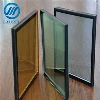
An insulated glass unit (IGU) consists of two or more glass panes separated by a spacer and sealed around the perimeter. The space between the panes creates an insulating cavity that reduces heat transfer through the glazing. Depending on the refrigeration system and required thermal performance, commercial refrigeration glass can use double-glazed or multi-pane configurations.
Compared with a single glass panel, insulated glass provides several advantages for refrigerator and freezer doors:
- Improved thermal insulation
- Reduced heat transfer through the glass
- Better energy efficiency of the glazing system
- Clear visibility into refrigerated display areas
- Flexible configurations for different refrigeration applications
For lower-temperature applications, the glass configuration should be selected according to the required insulation performance and operating conditions.
Learn more about Laurel Insulated Glass Unit
Low-E Glass for Energy-Efficient Refrigeration
In commercial refrigeration applications, Low-E glass is commonly incorporated into an insulated glass unit rather than being considered only as a standalone glass panel. The combination of a Low-E coating and an insulating cavity helps improve the overall thermal performance of refrigerator and freezer door glazing. This makes Low-E insulated glass particularly suitable for applications where manufacturers are looking for improved energy efficiency while maintaining product visibility.
Depending on the required configuration, Low-E glass can be combined with tempered glass and insulated glass processing to create glazing for commercial refrigerators, freezer doors, beverage coolers, and refrigerated display cabinets.
Learn more about Laurel Insulated Glass Unit

How to Choose Glass for Refrigeration Equipment
When selecting commercial refrigeration glass, manufacturers and buyers should consider several factors.
- Operating Temperature
A refrigerated display cabinet and a low-temperature freezer operate under different conditions. The required glass structure and insulation performance should therefore be evaluated according to the equipment's working temperature.
- Thermal Insulation
If reducing heat transfer is a priority, insulated glass is generally more suitable than single glazing. The number of glass panes, cavity configuration, spacer system, and glass type can all influence thermal performance.
- Safety Requirements
Glass doors in commercial environments may be opened and closed frequently and can be exposed to mechanical impact. Tempered glass provides additional safety and strength for these applications.
- Energy Efficiency
Low-E coatings can be incorporated into an IGU to reduce radiant heat transfer. For refrigeration equipment designed with higher energy-efficiency requirements, Low-E insulated glass can provide an effective glazing solution.
- Product Visibility
Commercial refrigeration doors also serve as display windows. Glass transparency, coating selection, and overall glazing configuration should balance thermal performance with clear product visibility.
Glass Solutions for Refrigerator and Freezer Manufacturers
Laurel Glass supplies processed glass for commercial refrigerator and freezer applications, including tempered glass, insulated glass, and Low-E glass. Different glass processing options can be combined according to project and equipment requirements.
For refrigerator and freezer manufacturers, selecting the appropriate glass configuration can help balance safety, thermal insulation, energy efficiency, and product visibility.