



Anti-Slip Glass
Custom Anti-Slip Glass Solution for Floor and Staircase
Anti-slip glass is a safety glass designed for areas where people walk directly on the glass surface. By adding a slip-resistant surface treatment to toughened glass or laminated glass, it provides better traction than untreated smooth glass while maintaining the transparency and modern appearance of architectural glazing.
Laurel Glass supplies custom anti-slip glass for commercial and architectural projects, including glass floors, glass stairs, walkways, platforms, viewing areas, and other walk-on glass applications. We work with architects, contractors, glass processors, facade companies, and commercial building developers who require project-specific glass rather than standard off-the-shelf panels.

Laurel Glass can produce anti-slip glass using tempered glass, laminated glass, and toughened laminated glass according to the required application. For structural walking surfaces, laminated configurations can combine multiple glass layers with suitable interlayers to improve overall safety and help retain the glass after breakage.
The walking surface can be processed with different anti-slip patterns or treatments to increase surface friction. This makes the glass more suitable for pedestrian areas where ordinary smooth glass may become slippery, particularly in entrances, stairs, walkways, platforms, and other high-traffic areas.
Clear and low-iron glass options are available when high transparency is important. Frosted or patterned effects can also be considered when a project requires more privacy or a specific architectural appearance.
Product Specification
| General Size | Min.size: 600mm*600mm, Max. size: 2440*1830mm. ( Also produced as requested ) |
| Thickness | 8mm, 10mm, 12mm, 8+8mm, 10+10mm, 12+12mm. |
| Basic Panel | Clear glass, ultra-clear glass. |
| Shape | Rectangle, square, and round. |
| Processing | Tempering, frosting, and laminating. |
For project buyers, the challenge is also choosing the correct glass composition. Glass thickness, number of laminated layers, interlayer, panel dimensions, support conditions, expected loads, edge processing, and anti-slip treatment can all affect the final specification.
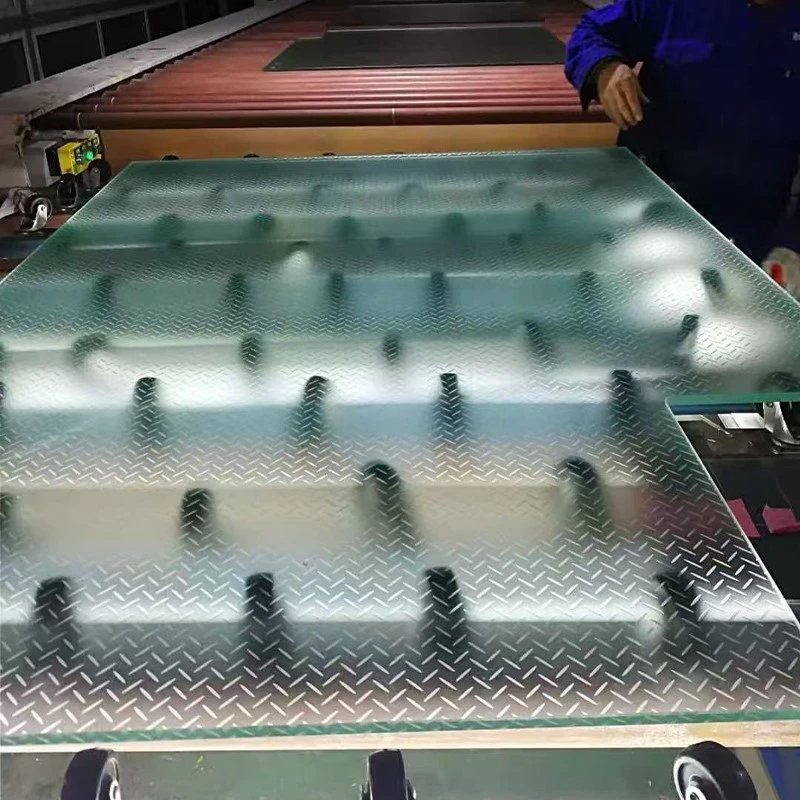


Instead of using one fixed configuration for every project, Laurel Glass provides custom anti-slip glass based on drawings and application requirements. Buyers can provide glass dimensions, drawings, intended use, support conditions, and required standards for technical evaluation and production.
Product Types


Benefits of Anti-Slip Glass
Improved Slip Resistance
The treated walking surface provides greater friction than untreated smooth glass, helping reduce slipping risks on glass floors, glass stairs and other walkable glass surfaces.
Toughened and Laminated Safety Construction
Anti-slip glass can be combined with toughened glass and laminated glass to meet the safety requirements of architectural walking surfaces. Laminated configurations also help retain broken glass within the assembly if damage occurs.
Transparency and Natural Light
Clear or low-iron anti-slip glass allows architects to create transparent floors, stairs and platforms without completely blocking light between spaces.
Custom Glass Configuration
There is no single glass structure suitable for every floor or staircase. Glass type, laminated build-up, interlayer, surface treatment, shape and processing can be customized according to project drawings.
Suitable for Complex Fabrication
Anti-slip glass can be produced with polished edges, holes, notches, cut-outs and custom shapes, making it easier to integrate with different staircase and flooring support systems.
Multiple Surface and Appearance Options
Anti-slip patterns and surface treatments can balance grip, transparency and decorative requirements. Architects can select the appropriate solution according to the visual concept and use environment.
Application of Anti-Slip glass

Anti-Slip Glass for Glass Floors
A glass floor must provide more than transparency. As a walkable building element, it also needs an appropriate structural glass configuration and a surface designed for pedestrian use. This makes anti-slip glass suitable for commercial buildings, hotels, shopping centers, offices, exhibition spaces, viewing platforms, and other architectural areas where designers want to introduce daylight and visual connection between different levels.
Our anti-slip glass floor solutions can combine toughened glass with laminated glass construction. The anti-slip treatment is applied to the walking surface to improve grip while retaining the visual openness associated with glass flooring.
Efficiency leap Precision and stability
Glass stairs place particularly high demands on the walking surface because users repeatedly step on relatively small areas. For this reason, anti-slip glass stairs and glass stair treads can use toughened laminated glass with a slip-resistant top surface. The combination provides the visual appearance of transparent glass together with a surface designed to improve pedestrian grip.
For architects and contractors, this provides greater flexibility when integrating glass stair treads into steel, stainless steel, or other supporting structures.

Solving Safety and Design Requirements Together
Standard smooth glass may not provide the surface performance required for a walkable area. At the same time, replacing glass with an opaque flooring material can change the architectural concept and reduce light transmission.
Anti-slip glass provides another option. It combines a slip-resistant walking surface with safety glass construction, allowing architects to retain the transparency and clean appearance of glass while addressing practical requirements for floors and stairs.
For project buyers, the challenge is also choosing the correct glass composition. Glass thickness, number of laminated layers, interlayer, panel dimensions, support conditions, expected loads, edge processing and anti-slip treatment can all affect the final specification.
Instead of using one fixed configuration for every project, Laurel Glass provides custom anti-slip glass based on drawings and
application requirements. Buyers can provide glass dimensions, drawings, intended use, support conditions and required standards for technical evaluation and production.
Frequently Asked Questions
Q: What is anti-slip glass?
A: Anti-slip glass, also called slip-resistant glass or non-slip glass, is glass with a specially treated walking surface designed to increase friction. It is commonly used for glass floors, glass stairs, stair treads, walkways and other areas where people walk directly on glass.
Q: What type of glass is used for anti-slip glass floors?
A: Glass floor applications commonly use tempered laminated glass or multi-layer laminated safety glass. The exact configuration depends on panel dimensions, support conditions, design loads, installation method and applicable building standards.
Q: Can anti-slip glass be used for glass stairs?
A: Yes. Anti-slip glass is suitable for glass stairs and glass stair treads. The walking surface can receive an anti-slip treatment, while toughened and laminated glass can be combined according to the structural requirements of the staircase.
Q: What is the difference between normal glass and anti-slip glass?
A: Normal smooth glass has a relatively smooth walking surface and can become slippery, particularly when contaminated or wet. Anti-slip glass uses a treated or textured surface to increase friction and provide better grip for pedestrian applications.
Q: Is anti-slip glass always laminated?
A: Not necessarily. Anti-slip treatment describes the walking surface, while lamination describes the glass construction. However, laminated glass is commonly specified for structural glass floors and stair treads because the interlayer helps hold the glass assembly together after breakage. The final structure should follow the project's engineering requirements.
Q: Can you customize anti-slip glass for a specific project?
A: Yes. Laurel Glass can customize glass type, laminated structure, dimensions, shapes, holes, notches, edge processing, interlayers and anti-slip patterns according to project drawings and specifications.
Q: How do I choose the glass thickness for a glass floor or staircase?
A: Glass thickness should not be selected only according to panel size. The design should also consider the laminated structure, support system, span, expected loads, fixing method, application environment and applicable building standards. Project drawings and load requirements should therefore be reviewed before confirming the glass specification.
Q: What information should I provide when requesting a quotation?
A: For a more accurate quotation and specification review, please provide the glass dimensions, quantity, drawings, glass application, required glass type, laminated configuration, anti-slip surface requirements, edge processing, holes or notches, and relevant project standards.