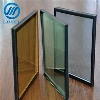

With increasing requirements for energy efficiency, indoor comfort, and sustainable building design, high-performance glazing solutions have become an important part of building performance. Insulated glass and vacuum glass are popular energy-efficient glass products. They may look similar because both use two glass panes with a sealed space between them, but their structures and working principles are quite different.
Insulated glass has become a standard choice for commercial buildings, curtain walls, and residential windows because of its reliable performance and cost-effectiveness. Vacuum glass is a newer technology that aims to achieve higher insulation performance in a thinner structure.
Understanding the differences between insulated glass and vacuum glass can help architects, contractors, and building owners select the right glazing solution for their projects.
What Is Insulated Glass?
Insulated glass is made by combining two or more glass panes with a sealed space between them. The glass layers are separated by a spacer bar, and the cavity is usually filled with dry air or inert gases such as argon to improve thermal performance.
The spacer system helps maintain the distance between the glass panes, while the sealant prevents moisture and gas leakage. Some advanced IGUs also use warm edge spacers to reduce heat transfer around the glass edges. The air or gas-filled cavity acts as an insulating barrier. It slows down heat movement between the interior and exterior of a building, helping maintain a more comfortable indoor temperature throughout the year.
Laurel Insulated glass can also be combined with different glass types, such as Low-E glass, tempered glass, and laminated glass, to achieve specific performance requirements.
Learn More About Laurel Insulated Glass.

Advantages of Insulated Glass
- Improved thermal insulation
The sealed cavity reduces heat transfer and helps improve building energy efficiency. When combined with Low-E coatings and argon filling, insulated glass can provide excellent performance for many commercial and residential applications.
- Improved sound reduction
The air or gas layer between glass panes helps reduce outside noise, making insulated glass suitable for offices, hotels, apartments, and buildings located in urban areas.
- Reduced condensation risk
Because insulated glass helps maintain a more stable interior glass surface temperature, it can reduce condensation problems in colder climates.
- Flexible design options
Insulated glass can be customized with different glass combinations, thicknesses, colors, and coatings, making it suitable for a wide range of architectural designs.
What Is Vacuum Glass?
Vacuum glass is an advanced glazing product that uses a vacuum layer between two glass panes instead of an air or gas-filled cavity. During production, the air between the glass panes is removed to create a high vacuum environment. Since there are almost no gas molecules inside the cavity, heat transfer caused by air convection is greatly reduced.
To maintain the space between the glass panes, vacuum glass uses tiny support pillars distributed between the two layers. The edges are then sealed with a highly durable sealing system to maintain the vacuum condition over time. This allows vacuum glass to achieve strong insulation performance while maintaining a slim profile.
Learn More About Laurel Vacuum Insulated Glass.

Advantages of Vacuum Glass
- Thermal insulation performance
The vacuum layer minimizes heat transfer caused by air movement and conduction. This gives vacuum glass excellent energy-saving performance.
- Acoustic performance
Vacuum glass can provide better noise reduction compared with many standard glazing systems. Because the vacuum layer reduces the medium through which sound travels, it is especially suitable for locations affected by traffic noise or industrial noise.
- Condensation control
The excellent insulation performance helps keep the inner glass surface warmer, reducing the possibility of condensation in cold environments.
- Slim and lightweight design
The biggest advantage of vacuum glass is its thin structure. It can achieve high insulation performance without requiring a thick glass unit, making it useful for renovation projects or buildings with limited window thickness.
The difference between Insulated Glass and Vacuum Glass
The main difference is the material inside the glass space. Insulated glass uses air or argon as an insulating layer. The gas space reduces heat transfer by slowing down the movement of heat between the two glass panes. Vacuum glass removes almost all air from the space between the glass panes and creates a vacuum environment. Without air in the space, heat transfer caused by convection is significantly reduced. This allows vacuum glass to achieve higher insulation performance with a much thinner structure.

When comparing insulated glass and vacuum glass, several key differences emerge that can help you determine which option is best suited for your specific needs.
Thermal insulation performance
For most commercial buildings, insulated glass provides a reliable balance between energy efficiency and cost. But vacuum glass provides even higher insulation performance because the vacuum layer prevents most air-related heat transfer. It is often selected for high-performance buildings, passive house projects, and applications where maximum energy savings are required.
Longevity and maintenance
Insulated glass units can be susceptible to seal failure over time, leading to moisture infiltration and reduced performance. On the other hand, vacuum glass is less prone to seal failure and does not suffer from gas leakage, making it a more durable and low-maintenance option in the long run.
Cost Comparison
Cost is also a significant consideration. While the superior thermal performance of vacuum glass may lead to long-term energy savings, the higher production costs and potential for damage may make it a more expensive initial investment compared to insulating glass. However, for projects that require superior insulation, excellent sound control, or a thin glazing solution, vacuum glass can provide long-term value.
Conclusion
In conclusion, insulated glass and vacuum glass both provide effective solutions for improving building energy efficiency, but they use different approaches. IGU provides effective thermal insulation and noise reduction, while VIG offers superior thermal performance, longevity, and low maintenance.
Choosing the right glass system is not only about comparing insulation values. The best solution should match the specific needs of the project and provide long-term comfort, energy savings, and architectural value.