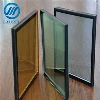

Among the different types of heat-treated glass, tempered glass and heat-strengthened glass are two commonly used products. Both undergo a controlled heating and cooling process to increase their strength, but they differ in cooling rates, surface compression, breakage patterns, and applications.
Understanding the difference between tempered glass and heat-strengthened glass can help architects, contractors, and glass buyers select the right glass for their projects.
What Is Tempered Glass?
Tempered glass, also known as toughened glass or fully tempered glass, is a type of safety glass produced through a controlled heat treatment process. During production, float glass is heated to approximately 620°C and then rapidly cooled using high-pressure air. This rapid cooling creates compressive stress on the glass surfaces and tensile stress in the inner layer. The resulting stress distribution gives tempered glass significantly higher mechanical strength than ordinary annealed glass.
Key Features of Tempered Glass
- High mechanical strength: Tempered glass is generally around four times as strong as annealed glass of the same thickness and type.
- Improved thermal resistance: It can withstand greater temperature differences and thermal stress than ordinary float glass.
- Safety breakage pattern: When broken, fully tempered glass fractures into numerous relatively small pieces, reducing the risk of severe cutting injuries compared with ordinary annealed glass.
- Impact resistance: Its increased surface compression provides better resistance to mechanical impact.
Learn more about Laurel Tempered Glass
What Is Heat-Strengthened Glass?
Heat-strengthened glass is another type of heat-treated glass. It is manufactured through a similar heating process to tempered glass, but it undergoes slower and more controlled cooling. The slower cooling rate creates a lower level of surface compression than fully tempered glass. As a result, heat-strengthened glass has greater strength than annealed glass but lower strength than fully tempered glass. Heat-strengthened glass is generally around twice as strong as annealed glass of the same thickness and type.
Key Features of Heat-Strengthened Glass
- Larger breakage fragments: When broken, heat-strengthened glass typically fractures into larger pieces with shapes more similar to annealed glass.
- Better glass retention: In many framed glazing systems, broken heat-strengthened glass tends to remain within the glazing pocket rather than immediately falling out.
- Suitable for laminated applications: Heat-strengthened glass is commonly used as a component of laminated glass, where the interlayer helps retain broken fragments.
Learn more about Laurel Heat-Strengthened Glass

Tempered Glass vs Heat-Strengthened Glass: Key Differences
Although both products belong to the heat-treated glass category, their performance characteristics are different. The main differences are related to the cooling process, surface compression, mechanical strength, and breakage behavior.
| Comparison | Tempered Glass | Heat-Strengthened Glass |
|---|---|---|
| Other Names | Toughened Glass, Fully Tempered Glass | Heat-Strengthened Glass |
| Manufacturing Process | Heating followed by rapid cooling | Heating followed by slower controlled cooling |
| Surface Compression | Higher | Lower |
| Strength Compared with Annealed Glass | Approximately 4 times | Approximately 2 times |
| Thermal Stress Resistance | Higher | Higher than annealed glass |
| Breakage Pattern | Small, relatively blunt particles | Larger fragments |
| Safety Glazing | Can meet safety glazing standards | Monolithic glass does not meet standard safety glazing requirements |
| Typical Applications | Doors, windows, railings, partitions, shower enclosures | Curtain walls, IGUs, laminated architectural glazing |
The strength values above are general industry guidelines. Actual performance depends on glass thickness, dimensions, glass type, processing conditions, and applicable standards.
Conclusion
Tempered glass and heat-strengthened glass are both important products in modern architectural glazing. While they share a similar manufacturing process, their different cooling rates result in different strength levels and breakage characteristics.
Tempered glass offers higher mechanical strength and can meet safety glazing requirements, making it suitable for doors, railings, partitions, and other applications where safety is a priority. Heat-strengthened glass provides moderate strength improvement and better resistance to thermal stress, making it a practical choice for laminated glass and certain curtain wall applications.
Understanding these differences allows architects, contractors, and glass buyers to select the appropriate glass configuration for their projects.
Frequently Asked Questions
Q: Is tempered glass stronger than heat-strengthened glass?
A: Yes. Fully tempered glass is generally around four times as strong as annealed glass, while heat-strengthened glass is approximately twice as strong. Therefore, tempered glass provides higher mechanical strength than heat-strengthened glass of comparable thickness and type.
Q: Is heat-strengthened glass the same as tempered glass?
A: No. Both are heat-treated glass products, but they have different surface compression levels and breakage characteristics. Tempered glass undergoes faster cooling and develops higher surface compression, while heat-strengthened glass is cooled more slowly.
Q: Does tempered glass break into small pieces?
A: Yes. Fully tempered glass typically breaks into numerous relatively small particles rather than large, sharp shards. This reduces the risk of serious cutting injuries compared with ordinary annealed glass.
Q: Can heat-strengthened glass be laminated?
A: Yes. Heat-strengthened glass can be laminated with an appropriate interlayer, such as PVB or SGP. The interlayer helps hold broken glass fragments together and improves the overall safety performance of the laminated glass assembly.
Q: Can heat-strengthened glass be cut or drilled after production?
A: No. Similar to fully tempered glass, heat-strengthened glass cannot be cut, drilled, or modified after heat treatment. All required cutting, edge processing, holes, and notches must be completed before the heat-strengthening process.