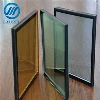

As modern commercial buildings increasingly incorporate digital technology into architectural design, LED glass is becoming an interesting option for architects, facade designers, and commercial building developers. Unlike conventional LED display screens, LED glass integrates LED components into a laminated glass structure, combining visual display capabilities with architectural glazing functions.
Although both products use LED technology to display images, graphics, and information, they differ significantly in construction, transparency, architectural integration, and application. So, what is the difference between LED glass and a traditional LED display screen? Which solution is more suitable for architectural windows, glass doors, and curtain walls?
What is LED Glass
LED glass, also known as LED laminated glass or transparent LED glass, is a functional architectural glass product that integrates LED components and transparent conductive circuits into the interlayer between two glass layers. When connected to a compatible power supply and control system, it can display visual content, graphics, and lighting effects directly through the glass.
Depending on project requirements, LED laminated glass can be customized and potentially combined with tempered glass or incorporated into insulated glass units (IGUs), subject to the compatibility of the LED system and glazing construction.
Unlike a conventional LED display installed behind or in front of a glass panel, LED laminated glass incorporates the LED system into the glass assembly itself. This integration allows LED glass to serve as part of an architectural glazing system while providing additional visual communication functions.


Common Applications of LED Glass
- Glass entrance doors
- Glass curtain walls
- Shopping mall facades
- Exhibition centers
- Hotel lobbies and commercial interiors
- Architectural glass partitions
For architects and facade contractors, LED glass provides another way to integrate digital visual elements into building surfaces without treating the display as a completely separate architectural component.
Learn more about Transparent LED Glass
What Is LED Display Screen?
A traditional LED display screen is an electronic display system made up of multiple LED modules or pixels. Each pixel contains LED components that emit light to produce images, videos, text, and other digital content.
LED display screens are commonly installed on walls, building facades, advertising structures, stages, and commercial signage systems. Their display performance depends on factors such as pixel pitch, brightness, resolution, viewing distance, and installation environment.
LED Glass vs. Traditional LED Display: Key Differences
Although both products use LED technology, their structures and intended functions are different.
-
Product Structure
The main difference lies in how the LED components are integrated. LED components and transparent conductive circuits are integrated into the laminated glass structure, between two glass layers. The glass itself becomes part of the display system; its construction combines architectural glazing with LED functionality. An LED display consists of independent LED modules, circuit boards, electronic components, and supporting structures. The modules are assembled into a display panel and connected to a control system. The display screen is a separate electronic product and does not inherently function as a laminated safety glass panel.
-
Transparency and Light Transmission
Transparency is one of the most important differences between LED glass and conventional LED display screens. LED laminated glass is designed to maintain a degree of transparency. When the LED system is not displaying content, the glass can retain a transparent architectural appearance, depending on the LED arrangement and glass configuration. Most LED display screens are designed for visible image presentation rather than transparency. Their modules and supporting structures generally form a more opaque display surface.
Transparent LED display screens are also available, but they use different display structures and should not be confused with LED laminated glass.
-
Architectural Integration
LED glass is developed as an architectural glazing product. It can be incorporated into compatible window systems, glass doors, curtain walls, and other building glass structures. This allows architects to integrate digital display functions into selected glazing areas while retaining the role of glass in the building design. Traditional LED screens generally require independent installation structures, mounting frames, or support systems.
-
Display Function and Visual Experience
Both products can display visual information, but their design priorities are different. LED glass focuses on combining transparency and visual communication. It is suitable for architectural applications where the display function needs to coexist with natural light transmission and the appearance of glass. LED displays focus on displaying digital content with clear visibility, brightness, and image resolution. They are more suitable for applications requiring prominent advertising, video playback, and large-format digital signage.
How to Choose Between LED Glass and LED Display Screens?
The right choice depends on the primary function of the project.
Choose LED laminated glass when:
- The project requires an architectural glass product with integrated LED functionality.
- Maintaining a degree of transparency is important.
- LED components need to be incorporated into windows, doors, or curtain walls.
- The design combines natural light transmission with visual communication.
- The building project requires customized glazing configurations.
Choose an LED display screen when:
- The main purpose is advertising or digital signage.
- High visibility and large-format content presentation are priorities.
- The display does not need to function as architectural glazing.
- A separate display installation is more suitable for the building design.
For architects, commercial developers, and facade contractors, understanding these differences during the design stage can help avoid selecting a display product that does not meet the building's glazing requirements.
Looking for a customized LED laminated glass manufacturer?
Laurel Glass supplies architectural glass products for commercial buildings and specialized glazing projects. Our LED glass solutions can be customized according to project requirements, including glass construction, dimensions, LED arrangement, and potential integration with tempered or insulated glass.
Visit our LED Laminated Glass to learn more about the product structure, advantages, and architectural applications, or contact Laurel Glass to discuss your project specifications.