
Aluminium mirror
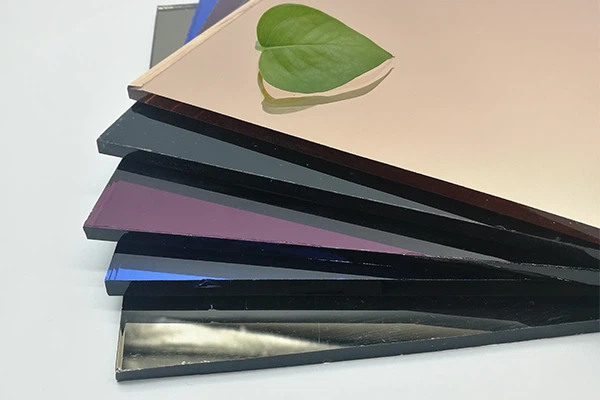
Aluminum mirror is also called an aluminum-coated mirror, aluminum glass mirror, mirror glass, or glass mirror panel. High-reflectivity aluminum mirrors are made using top-quality float glass as the base.
They go through a process: first, the glass is cleaned and polished, then aluminum is deposited onto it in a high-vacuum chamber, followed by a quick oxidation step. Then, a first coat of anti-corrosion paint is applied and dried, and finally a second, waterproof and hardening coat is applied and dried. High-quality float aluminum mirrors can be tinted into various colors for different decorative effects, like gray mirrors, bronze mirrors, green mirrors, or blue mirrors. Their thickness ranges from 1.1 mm to 8 mm, and a standard panel size is 2440x1830mm.
Silver mirror
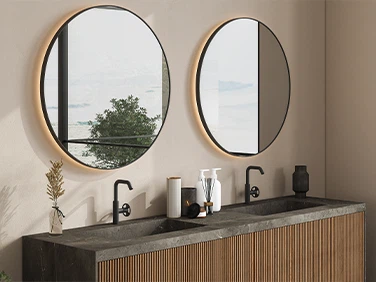
Silver mirror is commonly called a waterproof mirror, mercury mirror (though it's actually silver!), silver-coated glass mirror, glass mirror, or mirrored glass. Silver mirrors are widely used in furniture, crafts, interior decoration, bathroom mirrors, makeup mirrors, optical mirrors, and car rearview mirrors. When storing mirrors, don't pile them up with alkaline or acidic substances, and avoid damp environments.
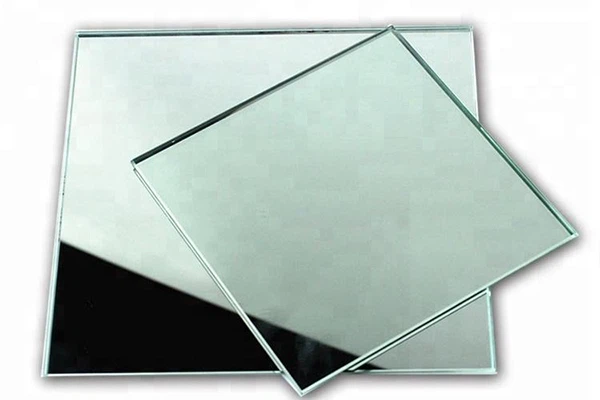
how to distinguish between silver mirrors and aluminum mirrors?
1. Reflection Clarity is Different
Compared to the paint on an aluminum mirror, the paint on a silver mirror looks deeper and darker. The paint on an aluminum mirror is lighter. Silver mirrors are much clearer; they reflect light and objects more accurately. Aluminum mirrors have lower reflectivity – your standard aluminum mirror reflects about 70% of light, so shapes and colors can look distorted. They also have a shorter lifespan and poor corrosion resistance; they're pretty much phased out in Europe and America. But aluminum mirrors are easier to mass-produce, and the raw materials are cheaper.
2. The Back Coating is Different
Usually, silver mirrors have two or more layers of protective paint on the back. If you carefully scrape off a tiny bit of the back paint, a copper-colored layer underneath means it's a silver mirror. A silvery-white layer means it's aluminum. Generally, the back coating on a silver mirror is dark gray, while on an aluminum mirror, it's light gray.

3. The Front Color/Brightness is Different
A silver mirror has a deep, dark kind of shine. An aluminum mirror has a bright, whitish shine that can seem a bit superficial or "floaty." So, just by color: the back is gray, and the front has that deep, dark shine. If you put the two types side by side, the one that looks brighter and whiter is the aluminum mirror.
4. The Metal Reactivity is Different
Silver mirror is a non-reactive metal, while aluminum mirror is reactive. Over time, aluminum mirror will oxidize, lose its original color, and turn gray. Silver won't. An even simpler test is to use dilute hydrochloric acid – aluminum will react very strongly, while silver will react much more slowly. Silver mirrors are more waterproof and moisture-resistant. They provide a clearer, brighter reflection and are generally more durable than aluminum mirrors in damp places like bathrooms.

Conclusion
In conclusion, while silver mirrors and aluminum mirrors may appear similar at a glance, they are fundamentally different in terms of composition, performance, and cost. Silver mirrors are superior in reflectivity, clarity, durability, and moisture resistance, making them the preferred choice for high-quality applications like bathrooms and décor. Although more expensive to produce, their longevity and excellent optical qualities offer greater value. Conversely, aluminum mirrors, being less costly and easier to manufacture, suffice for basic, short-term uses but are largely obsolete for demanding applications due to their tendency to distort images, oxidize, and degrade over time. Ultimately, the choice between them depends on the specific requirements for budget, quality, and intended use.
Get Mirror Glass Solution Quote