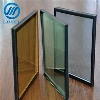

Choosing the right window glass is essential for improving a building's energy efficiency, safety, comfort, noise control, and overall aesthetics.
With today's advanced glass technologies, homeowners, architects, and contractors can select from a wide range of high-performance options. This guide provides a clear overview of the main types of window glass and offers practical advice on choosing the best glass for various applications.

Main options of Window Glass
-
Float Glass
Float glass is the base material for most architectural applications. It is produced through a continuous float process that ensures a uniform surface and high optical clarity. Although not typically used alone for exterior windows, float glass serves as the foundation for further processing, such as tempering, laminating, coating, or insulating.
Learn more about our high-quality float glass.
-
Tempered Glass
Tempered glass, also known as toughened glass, is created by heating and rapidly cooling float glass to increase its strength. It is four to five times stronger than standard glass and breaks into small granular pieces to reduce injury risk. This makes it ideal for windows and doors in high-impact or high-traffic areas, as well as for balcony railings, facades, and safety glazing.
Learn more about our high-strength tempered glass for windows.
-
Laminated Glass
Laminated glass consists of two or more layers of glass bonded together with a PVB or SGP interlayer. When broken, the glass fragments adhere to the interlayer, maintaining structural integrity and preventing dangerous shards from falling. Laminated glass also provides sound insulation, enhanced security, UV filtering, and is widely used in skylights, storefronts, balconies, and overhead glazing systems.
Learn more about customized laminated glass solutions for windows and doors.
-
Insulated Glass Units (IGUs)
Insulated glass units are made by sealing two or more panes of glass with a spacer to form an air- or gas-filled cavity. This structure significantly reduces heat transfer, improves thermal performance, and enhances indoor comfort. Insulated glass is essential for energy-efficient building designs, helping reduce heating and cooling costs in both residential and commercial applications.
Learn more about custom IGU for window systems.
-
Low-E Glass
Low-emissivity (Low-E) glass features a microscopically thin metallic coating that reflects infrared heat while allowing visible light to pass through. This helps maintain indoor temperature, reduces UV exposure, and lowers energy consumption. Low-E glass is widely used in modern windows and façades seeking improved solar control and energy performance.
Learn more about low-E glass for energy-efficient windows.
How to Choose the Right Window Glass
Selecting the right window or door glass depends on several factors, including climate, safety requirements, energy performance, and design preferences.
-
climate
In hot climates, solar-control Low-E glass paired with insulated glass helps reduce heat gain and minimize cooling costs. Cold climates benefit from double or triple IGUs with high-performance Low-E coatings that retain indoor heat. In humid or coastal regions, laminated glass provides better durability and added safety.
-
Safety
Tempered glass is recommended for sliding doors, entry doors, and areas with frequent human contact due to its high impact resistance. Laminated glass offers superior security and is suitable for storefronts, balconies, and overhead glazing where breakage risks are higher. Projects that require sound control, such as homes near busy roads or commercial buildings in urban areas, benefit greatly from laminated or laminated IGUs due to their acoustic properties.
-
UV protection
Low-E and laminated glass both significantly reduce UV transmission. Aesthetic preferences also play a major role-tinted and reflective glass enhance exterior design, while frosted and patterned glass elevate interior décor while providing privacy.

Why Choose Laurel Glass
Laurel Glass provides a full range of high-quality architectural glass products, including tempered glass, laminated glass, Low-E glass, insulated glass units, tinted and reflective glass, and customized glass solutions for windows, doors, and façades. Our advanced production lines and strict quality control ensure reliable performance and durability for residential, commercial, and industrial projects around the world.
Conclusion
Selecting the right window glass is essential for ensuring safety, comfort, and long-term energy efficiency. By understanding the different types of glass and considering climate, performance needs, noise levels, and design goals, you can make informed decisions that enhance the value and performance of your building.
Laurel Glass provides a full range of high-quality architectural glass products, including tempered glass, laminated glass, Low-E glass, insulated glass units, and customized glass solutions for windows, doors, and façades. Our advanced production lines and strict quality control ensure reliable performance and durability for residential, commercial, and industrial projects around the world.
For expert guidance and customized solutions, Laurel Glass is ready to support your next project !!