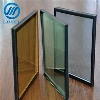

The upgrading of residents' consumption patterns, the encouragement of indigenous innovation, rural development initiatives, and the ongoing urbanization process are expected to ensure that domestic market demand for glass products maintains a trend of sustained growth over the medium to long term. Driven by the growth of related industries-such as construction, automotive, interior decoration, furniture, and information technology-as well as people's ever-rising expectations regarding their living environments, functionally processed products-such as safety glass and energy-efficient insulated glass-have gained widespread application. Consequently, the supply-and-demand landscape and consumption structure of flat glass are currently undergoing a continuous process of evolution.
The development of the glass industry is inextricably linked to numerous sectors within the national economy, playing an active role in driving overall economic growth. Accordingly, the "11th Five-Year Plan" outlined specific requirements for the development of the glass industry. Furthermore, a series of relevant laws and regulations have been promulgated with the aim of regulating and safeguarding the healthy development of the glass industry. In this new context, the glass industry must transform its growth model in accordance with the principles of the "Scientific Outlook on Development" and undertake substantive adjustments to its industrial structure, thereby fostering healthy and sustainable development across the entire sector.
Characteristics of Tempered Glass: The manufacturing process for tempered glass involves heating high-quality float glass to a temperature approaching its softening point, followed by the rapid cooling of the glass surface. This process induces compressive stress across the glass surface while concentrating tensile stress within the core layer. Due to the presence of this powerful, uniform compressive stress on the surface, any tensile stress generated when the glass is subjected to external pressure is effectively counteracted by the surface's inherent compressive force, thereby significantly enhancing the safety performance of the glass.