
During early trading on April 6, the photovoltaic (PV) sector led the market gains. As of the time of writing, individual stocks within the sector had posted gains of 6.07%, 3.88%, and over 2%, respectively.
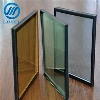
According to research data from Huachuang Securities, PV glass prices experienced a sharp decline this week. Specifically, the quoted price for 2.0mm coated glass fell to 22 yuan per square meter-a reduction of approximately 10 yuan per unit-marking a month-over-month drop of 30.71% and a decline of 40.54% from its year-to-date peak. Meanwhile, the quoted price for 3.2mm coated glass dropped to 28 yuan per square meter-a reduction of approximately 11 yuan per unit-representing a month-over-month decline of 28.21% and a 33% drop from its year-to-date high.
Huachuang Securities believes that this week's downward adjustment in PV glass prices has largely fulfilled market expectations regarding price reductions for PV glass within the current year. For every 10-yuan-per-square-meter reduction in PV glass prices, the corresponding cost of PV modules can be lowered by approximately 0.05 yuan per watt. This decline in glass costs will alleviate cost pressures on module manufacturers, create room for subsequent reductions in module prices, and is expected to stimulate new market demand. Concurrently, major PV glass manufacturers have all outlined extensive production expansion plans for this year. Investors should closely monitor the evolving industry-wide dynamic of "trading price for volume," as well as the strategy adopted by industry leaders to "offset lower prices with higher volume." On the other hand, the sharp pullback in PV glass prices has brought industry profitability levels back into a normal and rational range; this development should help curb the influx of new production capacity and deter the entry of new competitors. The technical capabilities and cost-control efficiencies of new entrants often fall short of those possessed by top-tier industry leaders; against a backdrop of squeezed profit margins, these new entrants may be compelled to re-evaluate and adjust their PV glass production plans. It is widely anticipated that China will achieve carbon neutrality by 2060, with carbon emissions peaking by 2030; meanwhile, the European Union is set to raise its carbon emission reduction target to 55%. Furthermore, the Biden administration's proposed $2 trillion infrastructure plan-designed to foster the growth of the PV industry-is expected to accelerate the transition of solar energy from a supplementary power source to a primary component of the energy mix. However, following the Lunar New Year, polysilicon prices surged by over 30%-a rise exceeding market expectations. In response to the wait-and-see sentiment among downstream investors, the production volume of PV modules subsequently contracted by 30% in March. As it currently stands, market conditions in April are expected to mirror the sluggish trend observed in March. At the end of March, the price of PV glass was lowered by 12 yuan, falling to 28 yuan per square meter. This adjustment is expected to exert a positive influence across the entire industry chain and also signals that the dynamic interplay among the various segments of the chain is drawing to a close. Market demand is projected to show signs of recovery in May. Looking at the year as a whole, a substantial number of PV projects-both domestic and international-are currently under construction or awaiting commencement. It is projected that newly installed PV capacity in 2021 will reach between 160 GW and 180 GW or higher, representing a year-on-year increase of over 30%. Given this outlook, investors are advised to gradually build positions in leading companies within the PV sector during market dips.
We believe that cost advantages and technological leadership constitute the fundamental pillars upon which PV manufacturing enterprises thrive. The rapid escalation in upstream raw material prices will accelerate the process of natural selection within the industry-specifically, a "market clearing" process-thereby bolstering the market share and bargaining power of enterprises that possess distinct competitive advantages. Investors should focus their attention on the opportunities for generating "Alpha" (excess returns) embedded within leading enterprises; in particular, manufacturers with vertically integrated production capabilities are expected to fully demonstrate the competitive superiority of their products during periods of market price volatility. Furthermore, as the issue of the subsidy deficit is gradually resolved-and as newly initiated projects subsequently shed their reliance on fiscal subsidies-PV power plant operators are poised to undergo a new round of corporate value revaluation.