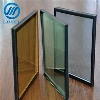

Building glass (also known as Architectural glass) is a widely used construction material. Its most typical application is as a transparent glazing material within a building's envelope, including windows in exterior walls. Additionally, glass is utilized to construct interior partitions and serves as an architectural decorative element. In architectural applications, the glass employed typically falls under the category of safety glass, specifically encompassing types such as strengthened glass, tempered glass, and laminated glass.
China is a major production hub for architectural glass, accounting for over 85% of the global output. The primary regions for consumption include China, Europe, and the United States.
Driven by the continuous advancement of domestic industrial technology, China's architectural glass industry has achieved significant progress. The application scope of architectural glass primarily spans residential and commercial buildings. Among these, commercial buildings constitute the dominant consumption sector, accounting for over 39% of total consumption; conversely, global demand for architectural glass within the residential sector is currently exhibiting a gradual downward trend.
In 2020, the global architectural glass market was valued at US$49.76 billion; by the end of 2026, the market size is projected to reach US$62.36 billion, reflecting a Compound Annual Growth Rate (CAGR) of 3.2% over the period from 2021 to 2026.
Over the past decade, China has witnessed rapid growth in its demand for construction materials. Looking ahead to the next ten years, both the production volume and demand for architectural glass are expected to continue their upward trajectory.