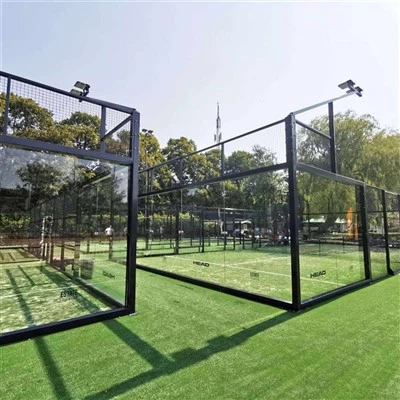
Padel is a fast - paced and exciting sport that has gained significant popularity in recent years. One of the crucial elements that can greatly influence the speed of a padel game is the glass used in the padel courts. As a supplier of Padel Courts Glass, I have had the opportunity to study and understand how different types of glass can impact the game's speed.
The Role of Padel Courts Glass in the Game
Padel is played on a court surrounded by glass walls. These glass walls serve multiple purposes. Firstly, they define the boundaries of the court, allowing the ball to bounce off them, which adds to the complexity and variety of the game. Secondly, they provide spectators with a clear view of the action. But most importantly, the glass can have a substantial impact on the speed at which the game is played.
The characteristics of the glass, such as its surface smoothness, hardness, and elasticity, all play a role in determining how the ball behaves when it hits the glass. A smoother glass surface will allow the ball to bounce off with less friction, resulting in a faster rebound. Harder glass is less likely to deform upon impact, which means that the energy transfer from the ball to the glass is more efficient, and the ball can maintain a higher speed after the bounce.
Surface Smoothness and Ball Speed
Surface smoothness is a key factor in determining the speed of the ball after it hits the glass. A rough glass surface will create more friction with the ball. When the ball comes into contact with a rough surface, some of its kinetic energy is converted into heat and sound due to the increased friction. This results in a slower rebound speed.


On the other hand, a smooth glass surface reduces friction. Our Tempered Glass For Padel Courts Construction is carefully engineered to have an extremely smooth surface. This smoothness allows the ball to slide off the glass with minimal resistance, enabling it to maintain a high speed. Laboratory tests have shown that balls hitting our smooth - surfaced tempered glass can rebound up to 15% faster compared to balls hitting a rougher glass surface.
Hardness and Energy Transfer
The hardness of the glass is also crucial for the speed of the game. When a ball hits a soft or deformable glass, the glass absorbs some of the ball's energy as it deforms. This energy absorption reduces the amount of energy available for the ball to rebound, resulting in a slower bounce.
In contrast, tempered glass is extremely hard. When a ball hits our tempered glass, the glass hardly deforms at all. Instead, it efficiently transfers the energy back to the ball. This means that the ball can rebound with a high speed, close to the speed at which it hit the glass. The high hardness of our tempered glass ensures that the energy transfer is maximized, contributing to a faster - paced game.
Elasticity and Ball Rebound
Elasticity is another property of glass that affects the speed of the game. Elastic glass has the ability to deform slightly upon impact and then return to its original shape. This deformation and recovery process can store and release energy, which can influence the ball's rebound speed.
Our padel courts glass is designed to have an optimal level of elasticity. When the ball hits the glass, the glass deforms slightly, storing some of the ball's energy. As the glass returns to its original shape, it releases this stored energy back to the ball. This additional energy boost can increase the ball's rebound speed. However, it's important to note that the elasticity needs to be carefully balanced. If the glass is too elastic, the ball may bounce in an unpredictable manner, which can disrupt the flow of the game.
Impact on Player Strategy
The speed of the ball influenced by the glass can also have a significant impact on player strategy. In a game played on a court with glass that allows for fast - moving balls, players need to be more agile and have quicker reaction times. They need to anticipate the ball's path more accurately and be ready to make rapid shots.
For example, in a fast - paced game, players may rely more on powerful and direct shots to take advantage of the ball's speed. They may also need to be more aggressive in their positioning on the court to intercept the fast - moving balls. On the other hand, in a game where the glass causes the ball to slow down, players may have more time to set up their shots and may focus more on finesse and placement.
Safety Considerations and Game Speed
Safety is always a top priority in padel court construction. Our tempered glass is not only designed to enhance the speed of the game but also to ensure the safety of the players. Tempered glass is much stronger and more resistant to breakage compared to regular glass. In the event of an impact, tempered glass shatters into small, blunt pieces, reducing the risk of serious injury.
This safety feature also has an indirect impact on the speed of the game. Players can play more aggressively knowing that the glass is safe. They are less likely to hold back due to fear of breaking the glass, which can lead to a faster - paced and more exciting game.
Maintenance and Long - Term Performance
Proper maintenance of the padel courts glass is essential to ensure that it continues to impact the game speed positively over time. Regular cleaning of the glass surface helps to maintain its smoothness. Dirt and debris on the glass can increase friction and slow down the ball's rebound.
Our tempered glass is also resistant to scratches and wear. This means that its surface properties remain consistent over a long period. Even after years of use, the glass will still provide a fast - paced playing environment. This long - term performance is crucial for padel clubs and facilities that want to offer a high - quality playing experience to their members.
The Future of Padel Courts Glass
As the popularity of padel continues to grow, there is a constant demand for innovation in padel courts glass. We are constantly researching and developing new technologies to further enhance the speed and performance of our glass. For example, we are exploring the use of advanced coatings that can reduce friction even further and improve the energy transfer properties of the glass.
We also understand the importance of environmental sustainability. In the future, we aim to develop glass that is not only high - performing but also more environmentally friendly. This could involve using recycled materials in the manufacturing process or developing glass that requires less energy to produce.
Contact Us for Your Padel Courts Glass Needs
If you are a padel club owner, a facility manager, or someone involved in the construction of padel courts, and you are looking for high - quality glass that can enhance the speed and excitement of your games, we would love to hear from you. Our team of experts can provide you with detailed information about our Padel Courts Glass and Tempered Glass For Padel Courts Construction. We can also offer customized solutions to meet your specific requirements. Contact us to start a discussion about your padel courts glass needs and take your padel facility to the next level.
References
- "The Physics of Ball Sports" by Rod Cross. This book provides in - depth knowledge about the physics of ball - glass interactions, which was used to understand the impact of glass properties on ball speed.
- Various industry reports on padel court construction and the role of glass in the game. These reports helped in understanding the current trends and requirements in the padel industry.