

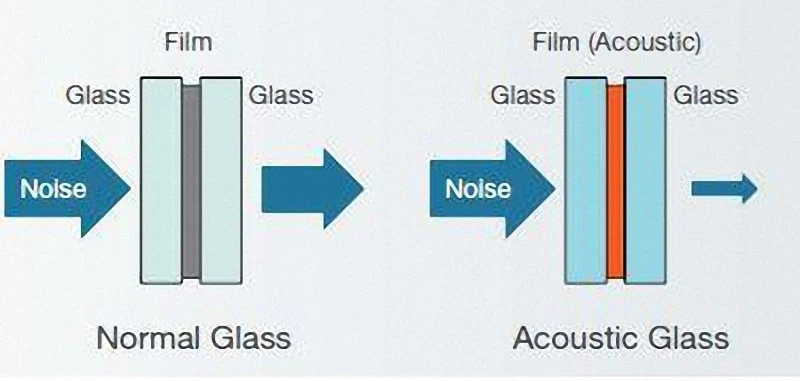
Standard laminated glass and acoustic laminated glass share a similar structure. Both use an interlayer to bond two or more glass panes together. The main difference lies in the type of interlayer and its ability to reduce sound transmission. Standard laminated glass mainly focuses on safety. When the glass breaks, the interlayer holds the fragments together and helps prevent them from falling. Acoustic laminated glass provides the same safety function while offering better sound insulation through a specially designed acoustic PVB interlayer.
So, which one should you choose for your project? Let's look at their structures, benefits, and key differences.
What Is Acoustic Laminated Glass?

Acoustic laminated glass is a type of laminated glass made by bonding two or more glass panes with a special acoustic PVB interlayer. The acoustic PVB interlayer has a specially developed formula that helps absorb sound vibrations. It reduces the amount of sound energy passing through the glass, making it suitable for buildings exposed to traffic, machinery, and other external noise sources.
When sound waves hit the glass surface, they cause the glass panes to vibrate. The acoustic interlayer helps dampen these vibrations by converting part of the vibration energy into heat. This process helps reduce sound transmission, particularly across certain low- and mid-frequency ranges.
Related Product: https://www.laurelglasstech.com/safety-glass/laminated-glass/acoustic-laminated-glass.html
Advantages of Acoustic Laminated Glass
Acoustic laminated glass combines the safety benefits of laminated glass with additional sound insulation performance. It is a practical option for projects where both protection and noise control matter.
Better Noise Reduction
The main advantage of acoustic laminated glass is its ability to reduce sound transmission. Its acoustic PVB interlayer helps absorb vibration and dampen sound energy. Compared with standard laminated glass, it can provide better noise reduction in selected frequency ranges.
Safety Protection
Acoustic laminated glass also provides the basic safety functions of standard laminated glass. If the glass breaks, the interlayer helps hold the broken pieces together. This reduces the risk of glass fragments falling or scattering and helps maintain a barrier after breakage.
More Comfortable Indoor Environments
External noise can affect daily activities, concentration, and rest. By reducing sound transmission through windows and glazed building elements, acoustic laminated glass helps create a quieter indoor environment.
Flexible Glass Configurations
Acoustic laminated glass can be combined with different glass types and thicknesses to meet project requirements. For projects that require both thermal insulation and noise reduction, acoustic laminated glass can be incorporated into an insulated glass unit (IGU).
Key Differences Between Standard Laminated Glass and Acoustic Laminated Glass
Although these two products look similar, their interlayers, sound insulation performance, and typical applications are different.
Interlayer Material
The main difference is the interlayer used between the glass panes. Standard laminated glass usually uses conventional PVB interlayers. Its main purpose is to bond the glass panes together and retain glass fragments after breakage. Acoustic laminated glass uses a specially formulated acoustic PVB interlayer. This material is designed to provide greater flexibility and vibration damping.
Sound Insulation Performance
Both types of laminated glass can reduce some sound transmission. However, acoustic laminated glass is specifically designed for noise control. Standard laminated glass provides basic sound reduction as part of its laminated structure. Its performance depends on the glass thickness, interlayer, and overall construction. Acoustic laminated glass offers improved sound damping in certain frequency ranges. It can be particularly useful for reducing traffic noise, engine noise, and other environmental sounds.
The actual performance depends on the complete glass configuration. Buyers should compare tested sound insulation data, such as the Sound Transmission Class (STC) or weighted sound reduction index (Rw), rather than relying only on the product name.
Glass Structure and Configuration
Standard laminated glass is commonly used in safety glazing applications. It can be produced with different glass thicknesses and interlayer options. Acoustic laminated glass often requires a more carefully selected combination of glass panes and interlayer thickness to achieve the required acoustic performance.
For projects with higher sound insulation requirements, manufacturers may also combine acoustic laminated glass with an insulated glass unit. For example, an acoustic laminated pane can be used as one side of a double-glazed unit. This structure combines the vibration-damping properties of acoustic PVB with the sound and thermal insulation benefits of an air or gas-filled cavity.
Appearance and Cost
From the outside, standard laminated glass and acoustic laminated glass are difficult to distinguish. However, acoustic PVB interlayers generally cost more than conventional PVB. The additional material and processing requirements can make acoustic laminated glass more expensive.
How to Choose the Right one for your project?
The right choice depends on your project's main requirements. Before selecting a glass product, consider the following factors.
Choose Standard Laminated Glass for General Safety Protection
If your main concern is preventing broken glass from falling or scattering, standard laminated glass is often a suitable option. It provides the required laminated safety structure without adding the cost of a specialized acoustic interlayer.
Choose Acoustic Laminated Glass for Noise Control
If your project is exposed to traffic noise, engine noise, or mechanical vibration, acoustic laminated glass may be a better choice. It provides safety protection while offering improved sound insulation in certain frequency ranges.
Consider Acoustic Laminated Insulated Glass for Higher Performance
Sometimes, a single acoustic laminated glass pane may not provide enough sound insulation for a project. For low-frequency traffic noise, a well-designed combination of acoustic laminated and insulated glass can be more effective than simply increasing glass thickness. This solution can help improve both sound and thermal insulation. However, the result depends on the complete IGU design.
Check Acoustic Test Data Before Ordering
Do not select acoustic glass based only on its thickness or product description. Ask your glass supplier or manufacturer for relevant acoustic test reports.
Conclusion
Standard laminated glass and acoustic laminated glass share the same basic laminated structure, but they serve different project needs. Standard laminated glass is mainly designed for safety protection. Acoustic laminated glass uses a specialized PVB interlayer to reduce vibration and improve sound insulation.
If your project mainly requires safety glazing, standard laminated glass may be sufficient. If the building faces traffic, machinery, or other noise sources, acoustic laminated glass is worth considering. For projects that require both noise control and thermal insulation, acoustic laminated insulated glass can provide another option.