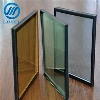

In modern architecture and safety glazing applications, laminated glass has become a preferred choice due to its superior strength, security, and durability. Among the most commonly used interlayers are PVB (Polyvinyl Butyral) and SGP (SentryGlas® Plus) Although both materials provide enhanced protection, their performance differs significantly depending on the project requirements.
This article explains the key differences between PVB laminated glass and SGP laminated glass, helping architects, builders, and homeowners choose the right solution for their applications.
What Is PVB Laminated Glass?
PVB laminated glass is made by bonding two or more layers of glass with a polyvinyl butyral interlayer under heat and pressure. PVB is the most widely used interlayer for laminated safety glass and offers:
Key Features of PVB Laminated Glass
- Strong Adhesion & Safety: When broken, the glass fragments adhere to the PVB layer, preventing shattering and reducing injury risk.
- Acoustic Performance: PVB interlayer helps absorb sound, making it ideal for residential and commercial buildings requiring noise reduction.
- UV Protection: Blocks over 99% of harmful UV rays, protecting interior materials from fading.
- Flexibility & Comfort: PVB is softer and more flexible, providing excellent visual clarity and impact resistance for everyday use.
- Cost-Effective: More economical than SGP, making it suitable for general architectural glazing
Learn more about PVB Laminated Glass.
What Is SGP Laminated Glass?
SGP (SentryGlas® Plus) is a high-performance ionoplast interlayer developed to offer superior strength and stiffness compared to traditional PVB. It is commonly used in applications requiring higher structural load-bearing capacity.
Key Features of SGP Laminated Glass
- 5x Stronger Than PVB: SGP laminated glass provides significantly higher tensile strength and rigidity.
- Superior Post-Breakage Stability: Even when broken, SGP interlayer maintains its shape, supporting greater loads and preventing collapse.
- Thinner & Lighter Designs: Stronger structural capacity allows for reduced glass thickness without compromising safety.
- High Moisture Resistance: SGP is less affected by humidity and temperature, ideal for exterior facades, canopies, balustrades, and skylights.
- Crystal-Clear Transparency: SGP interlayer maintains excellent clarity over time, with low yellowness index.
Learn more about SGP Laminated Glass.
PVB vs. SGP Laminated Glass: A Detailed Comparison
-
Thickness:
The PVB thickness is 0.38mm, 0.76mm, 1.14mm, multiples of 0.38mm.
The SGP thickness is 0.89mm, 1.52mm, 2.28mm, etc.
-
Material:
SGP is an abbreviation for SentryGuard Plus Interlayer, a product from the American brand DuPont.
PVB is Polyvinyl butyral; there are many brands all around the world, such as Decent PVB, etc.

The main difference is that SGP laminated glass remains standing even when both glass layers are broken, while PVB laminated glass is more likely to collapse or lose structural integrity once both sides are damaged.
SGP laminated glass is five times stronger and up to 100 times stiffer than PVB laminated glass.
Because of its superior strength and stability, designers often choose SGP laminated glass for applications exposed to severe weather conditions-such as storms, hurricanes, and cyclones-as well as for high-security environments or areas affected by conflict.

At Laurel Glass, we supply high-quality laminated glass solutions tailored to each project's needs. Whether you need standard PVB laminated glass or high-performance SGP laminated glass, our expert team is ready to help. Get Laminated Glass Quote Now!!